
If you're wondering how to get married in Berlin as a foreigner, here is the short answer. You register your intent to marry at a Berlin Standesamt (registry office), bring the documents your registrar asks for, and then marry within six months at any registry office in Germany. I photograph civil weddings for international couples in Berlin, so I meet couples at the end of this process, on the wedding day itself. As an immigrant myself, I've had to start over from scratch a few times, and I know how hard new beginnings can be.
This guide puts the paperwork in the order you'll actually do it, counting back from your wedding date, and then shows what the day looks like once you get there. Every rule links to its official source. I'm a photographer and not a lawyer, so your Standesamt's list is always the one that counts.
The short version: 5 steps to a Berlin Standesamt wedding
Here are the steps in order:
Book a consultation at the Standesamt you register with and get the document list for your case.
Gather those documents, with sworn translations and an apostille or legalisation where needed.
Register your intent to marry (Anmeldung der Eheschließung), normally together and in person.
Wait for the Standesamt to confirm that you can marry. From then you have six months.
Book your date and your ceremony location (Trauort), which can be any registry office in Germany.
Most foreign partners need a passport, a recent birth certificate and a certificate of no impediment to marriage (Ehefähigkeitszeugnis) from their home country. Documents that aren't in German must be translated by a translator sworn in Germany, and some countries also need an apostille or legalisation. If your home country doesn't issue the certificate, the Standesamt can ask Berlin's Kammergericht for an exemption.
You can register no earlier than six months before your wedding date. If either of you doesn't speak enough German, you'll need a sworn interpreter at the appointment and at the ceremony. The sections below take each step in turn.

Step 1: Find the right Standesamt to register with
You register at the Standesamt of the Berlin borough where one of you has a main or second residence. If neither of you lives in Germany, you register at the office where you want to marry. The service.berlin.de page on marriages with a foreign partner has the details, and the Federal Foreign Office covers couples who live abroad.
The documents each couple needs depend on their circumstances, and a personal consultation at the responsible Standesamt is required. That consultation is where you get your own list, so book it early.
Registering and saying "I do" can happen in different places
The office you register with doesn't have to be the office you marry at. Once you're approved, you can marry at any Standesamt in Germany within six months. In Berlin, holding the ceremony at a different office costs an extra €40. Choosing that room is the fun part, and I come back to it further down.
Do you both have to be there?
Yes, as a rule both partners register in person. If one of you can't come for an important reason, the other can register with a written power of attorney. If neither of you can attend, registration in writing or by proxy is possible. Ask your Standesamt which of these it accepts in your case.
Step 2: The documents (and why your list will be personal)
What follows is the base list from the city's English flyer. Your registrar will add to it depending on your nationalities and history, so treat it as a starting point.
Documents everyone needs
A valid passport or ID card.
A certified copy of your birth register entry (beglaubigter Ausdruck aus dem Geburtenregister), no older than six months.
A registration certificate (Meldebescheinigung) showing your marital status, if your main residence is outside Berlin. The city flyer says it must be no older than 14 days. Charlottenburg-Wilmersdorf asks for no older than 10 days, so check the limit at your own office.
Bring originals. Documents must not be altered, perforated or laminated.
The Ehefähigkeitszeugnis (certificate of no impediment to marriage)
If your capacity to marry falls under foreign law, the Standesamt will ask for an Ehefähigkeitszeugnis from the authorities of your home country. It confirms that your home law allows the marriage. Under §1309 of the German Civil Code it expires if you don't marry within six months of its issue date, or sooner if the certificate itself says so.
That six-month limit is the one to plan around. If you order the certificate too early, it can run out before your wedding day.
If your country doesn't issue one: the Kammergericht exemption
Some states don't issue the certificate, and stateless people can't get one. In that case you can ask for an exemption, which is also valid for six months. In Berlin the President of the Kammergericht (the higher regional court) decides. You apply only through your Standesamt. According to the Kammergericht, it takes at least three weeks, and the fee is between €15 and €305 depending on your income and the work involved.
Previously married or divorced abroad
If one of you was divorced outside Germany, the divorce may need to be recognised by the responsible German state justice authority before you can marry. The rules differ for divorces from EU countries, so raise this at your first consultation and plan extra time for it.
Step 3: Apostille, legalisation and translations
Documents that aren't in German must be translated by a translator sworn in Germany. Depending on the country that issued them, they may also need an apostille or a legalisation attached to the original. This table is a rough guide:
Another EU country: Usually no apostille, under EU Regulation 2016/1191, and certified translations from other EU states should be accepted (legal explainer). Confirm with your Standesamt.
A country in the Hague Apostille Convention: An apostille from the issuing country's authority, plus a sworn translation.
Any other country: Legalisation by the German embassy or consulate. In some countries legalisation is suspended, and German authorities start other checks instead.
A translation can't be apostilled, so the apostille always goes on the original document. If your names are written in Arabic, Greek, Hebrew or Cyrillic script, they must also be transliterated according to ISO norms. Sources: Federal Foreign Office on apostilles and service.berlin.de.
Step 4: The interpreter question
If either of you doesn't speak enough German, you need a sworn interpreter (beeidigter Dolmetscher) at the registration appointment and again at the ceremony. A friend can't step in, however fluent, because the interpreter has to be sworn. Book one as soon as you know your appointment dates (berlin.de).
On the day, the interpreter needs a valid passport or ID, the same as you and your witnesses.
Last checked: October 2026, against service.berlin.de, berlin.de and the Federal Foreign Office. Rules change, so confirm every step with your Standesamt.

How long it takes: a timeline that works backwards from your date
There's no official timeline. The expat site All About Berlin estimates two to ten months for the whole process. Three six-month rules decide your timing:
The registration window: you can register no earlier than six months before your wedding date.
The approval: once the Standesamt confirms you can marry, you have six months to do it.
Fresh documents: the Ehefähigkeitszeugnis and the birth register copy must be under six months old, and the registration certificate only days old (10 or 14, depending on the office).
Put together, they give a plan like this:
9 to 12 months before: Pick the office you'll register with and book the consultation. Ask how long your home country takes to issue the Ehefähigkeitszeugnis and any apostilles.
7 to 9 months before: Order the documents on your list that have no short expiry, and arrange sworn translations. Book a sworn interpreter for the appointment if you need one.
About 6 to 7 months before: Order the time-limited documents so they are still valid when you register and on the wedding day.
6 months before, at the earliest: Register together at the Standesamt. Bring a Meldebescheinigung issued within the last 10 to 14 days if your office asks for one.
After approval: Book your date and Trauort. Popular offices open dates six months ahead to the day. Confirm your photographer and venue.
The day: Passports or IDs for both of you, your witnesses and the interpreter.
The left column shows planning estimates built on the three six-month rules above. They aren't official deadlines, and your office's own timing comes first.
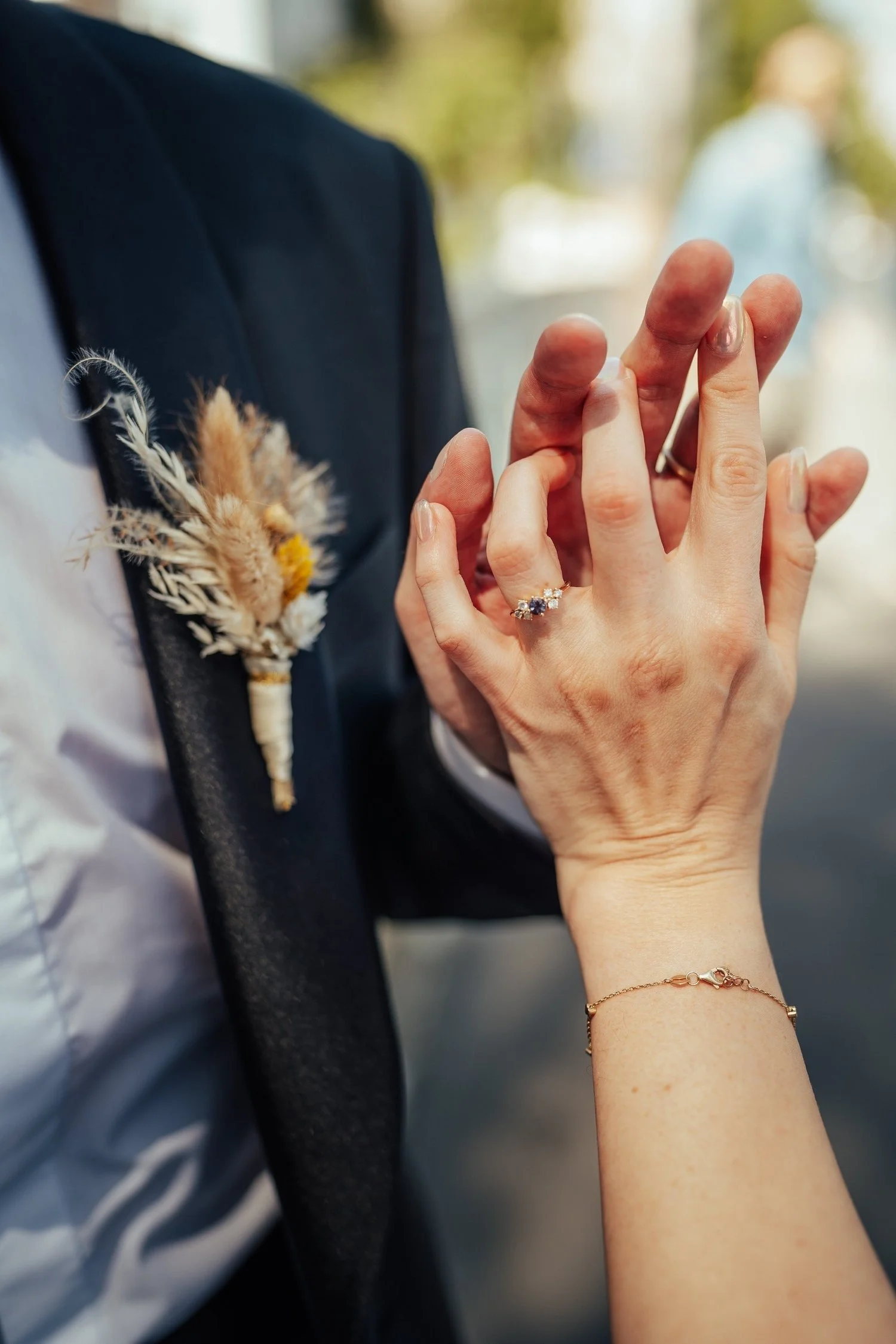
What it costs at the Standesamt
The registry office fees are set by the city. Translators, interpreters and the authorities issuing apostilles charge separately.
Registering your marriage: €45
Extra, per partner whose marriage falls under foreign law: €45
Ceremony at a different Standesamt from the one you registered with: €40
Ceremony outside normal opening hours: €80
Ceremony outside the office or at a branch location: €75 to €150
Affidavit, if your office needs one: €30
Marriage certificate, issued right after the ceremony: €12 each, €6 for each extra copy of the same kind issued at the same time
Kammergericht exemption, if needed: €15 to €305
Fees as of October 2026, from the berlin.de fee page and service.berlin.de. A multilingual international marriage certificate is also available.

Choosing where to marry: Berlin's Trauorte
After approval you can marry at any Standesamt or Trauort (ceremony location) in Berlin, or anywhere else in Germany. Some of Berlin's rooms are worth the trip across town, such as the former council chamber at Rathaus Schmargendorf, painted with scenes from Wagner, or the small room at Villa Kogge in Charlottenburg. Popular dates go fast, so book as early as the office allows, usually six months ahead to the day.
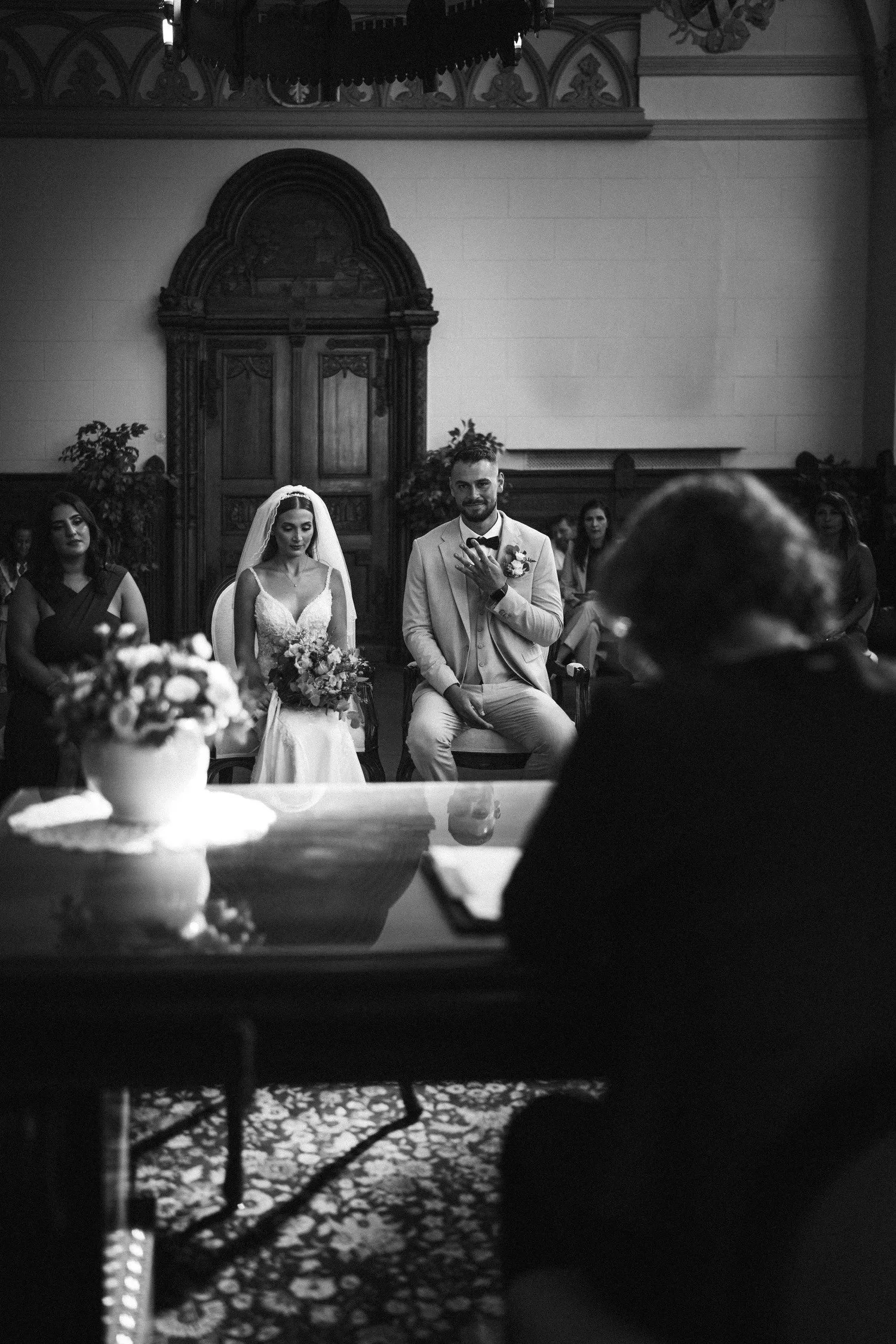
What happens on the day (from a photographer who's been in the room)
Bring your passports or IDs. The couple, the witnesses and the interpreter all need a valid one on the day. Witnesses are optional, and you can have up to two.
The ceremony itself is short. Offices book weddings in tight slots, for example every half hour at Rathaus Köpenick and every 40 minutes at Gutshaus Steglitz, so the next couple is usually waiting when you come out. Your marriage certificates are issued right after the ceremony, so you walk out with them.
Photo rules differ from office to office. At Rathaus Schöneberg, for example, the official handout says photos and film from the historic room may be restricted to private use and may not be published online (Merkblatt für Eheschließung ab 2026, January 2026). Before the day, ask your office three things: where the photographer can stand, whether flash is allowed, and how soon the room has to be cleared for the next couple.
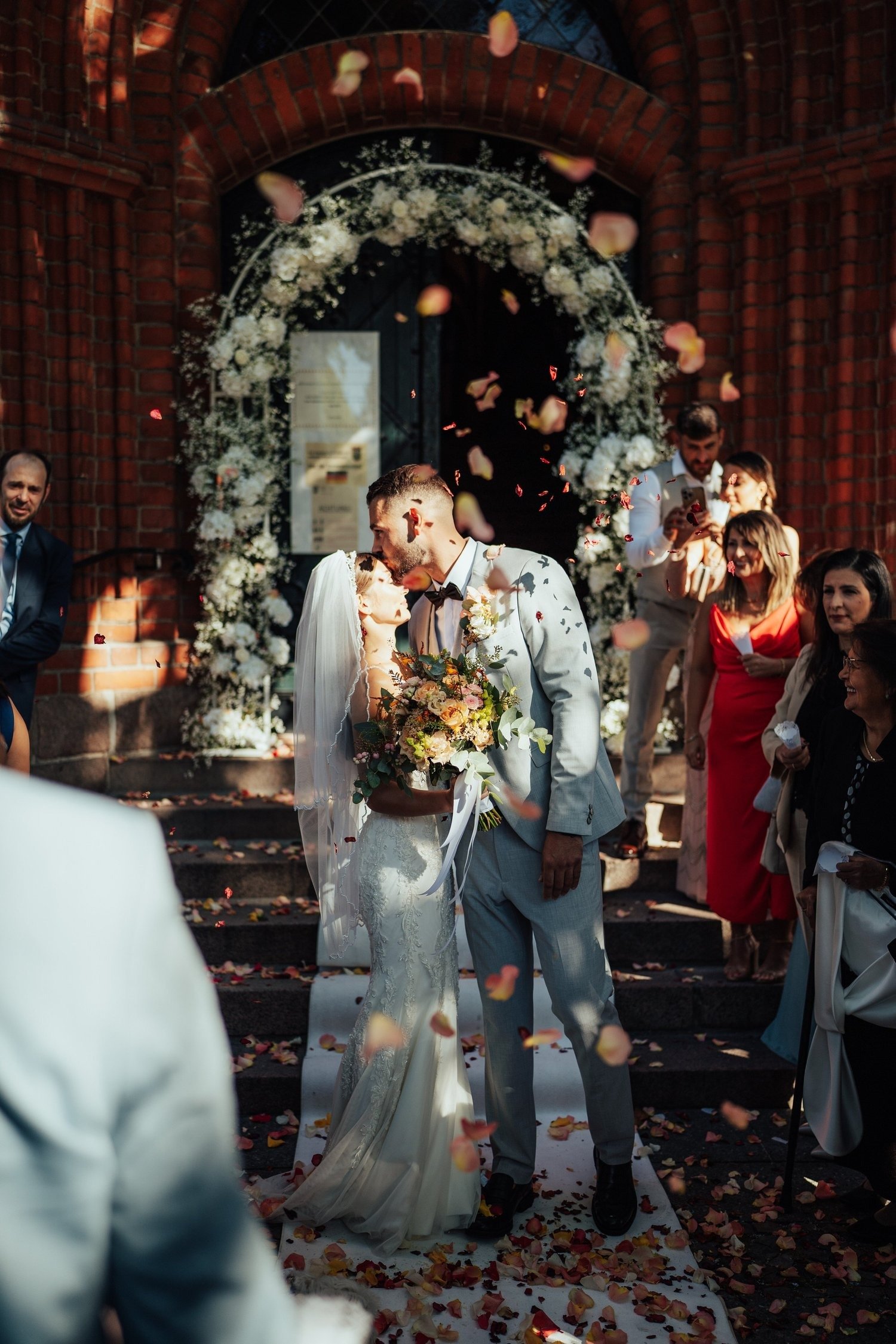
How much photography time you need
If you have a weekday morning slot at a registry office such as Rathaus Schmargendorf, here's a simple rule of thumb. For the arrival, the ceremony, family photos outside and a short couple session, plan on 1.5 to 2 hours. If a family meal follows, around three hours lets me cover the start of lunch as well.
My Standesamt collection covers two hours for €690, and you'll find the details on my pricing page. If you're comparing photographers, my guide to what a wedding photographer costs in Berlin explains what changes the price.
Booking vendors before your date is confirmed
Your date is only final once the Standesamt has approved your registration and confirmed the booking. Until then you're planning around a date that could still move, while venues and photographers take other bookings.
When you contact vendors in this phase, ask two things: what happens if your registry date changes, and when a deposit stops being refundable. Get the answer in writing.
My collections are booked online with a 30% deposit, as listed on my pricing page. If your registry date isn't confirmed yet, say so in your enquiry, and ask me how a date change would be handled before you pay.
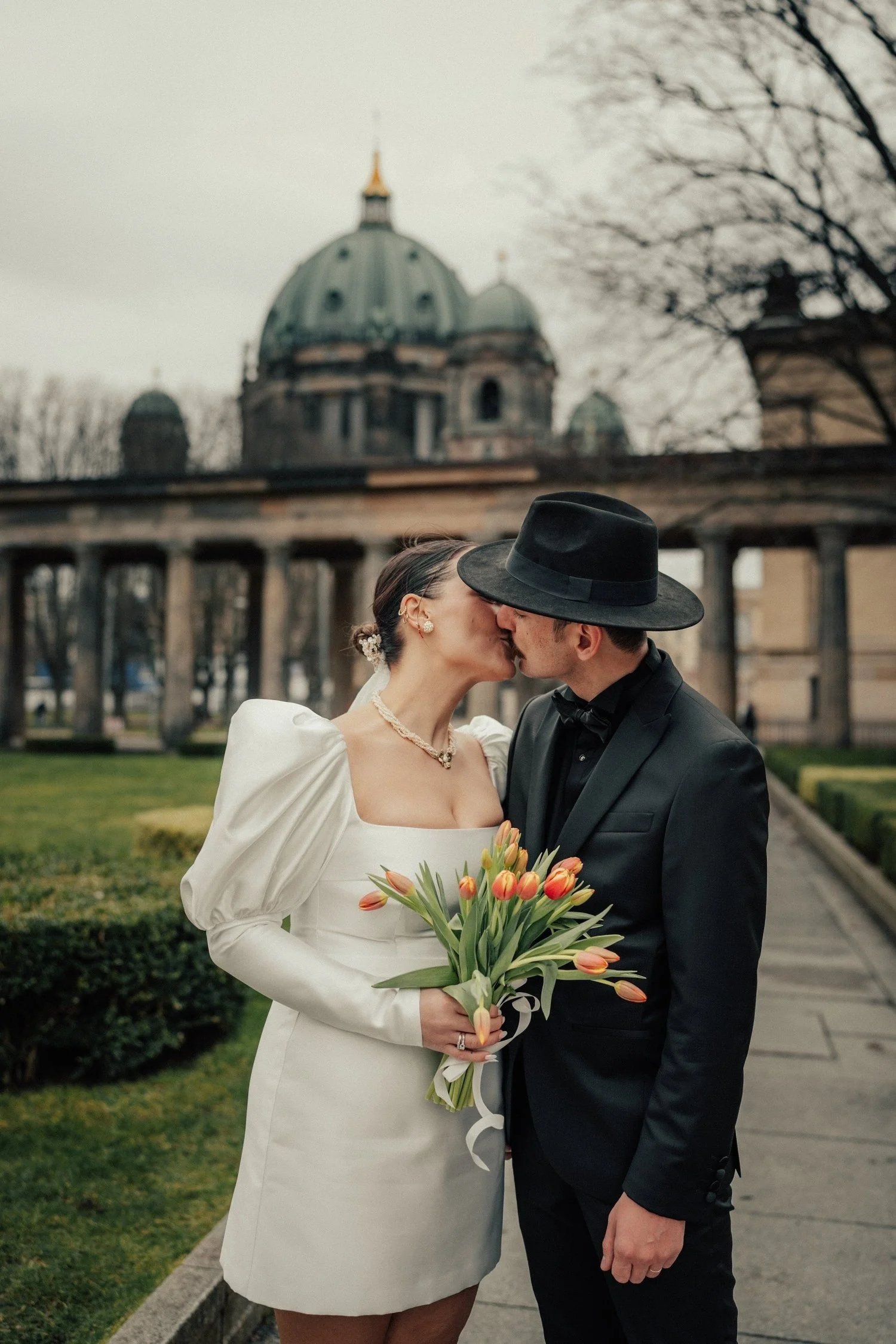
What if Germany is too slow? Marrying in Denmark and celebrating in Berlin
Some couples marry abroad, often in Denmark, and celebrate in Berlin afterwards. According to the Federal Foreign Office, a marriage abroad is generally recognised in Germany if both partners met the requirements of their national law and the local form was followed. For German citizens, registering that marriage in Germany is optional. You can't marry at a German embassy or consulate abroad.
Whether that route is easier depends on your documents, so read the Foreign Office page before you decide. If you marry elsewhere first and celebrate in Berlin later, the celebration can be photographed as its own day. If you want ideas, here are some outdoor places to celebrate in Berlin.
Questions couples ask
Do we both have to go to the Standesamt in person?
As a rule, yes. If one of you can't come for an important reason, the other can register with a written power of attorney. If neither of you can attend, registration in writing or by proxy is possible.
Can a friend translate at our ceremony?
No. If either of you doesn't speak enough German, you need a sworn interpreter (beeidigter Dolmetscher) at the registration appointment and at the ceremony.
Can we marry at any registry office in Berlin?
Yes. You register with your local office, and once you're approved you can marry at any Standesamt in Germany within six months. In Berlin a ceremony at a different office costs an extra €40.
Is it easier to marry in Denmark, and is that valid in Germany?
A marriage abroad is generally recognised in Germany if both partners met their national requirements and the local form was followed. Whether it's easier depends on your documents, so start with the Federal Foreign Office page.
We're marrying at Rathaus Schmargendorf on a weekday morning. How much time do we need for photos?
Schmargendorf marries couples on Thursday (April to December) and Friday mornings. For the ceremony, family photos and a short couple session, 1.5 to 2 hours is usually enough.
We're marrying at Rathaus Schöneberg and having a family meal afterwards. Can you cover all of it?
Yes. Around three hours covers the ceremony, a short couple shoot and the start of the meal. Schöneberg also has afternoon slots and selected Saturdays until 16:00, which suit a meal afterwards.
There will only be about 20 of us. Is a Standesamt wedding a good fit?
Yes. Many Berlin ceremony rooms only take small groups anyway. Rathaus Schöneberg takes up to 20 guests and Rathaus Pankow 18, while Schmargendorf fits up to 32 besides the couple.
Do you speak English with the family on the day?
Yes. I'm an English-speaking wedding photographer, so we can talk in English with you and your families on the day. The ceremony itself is in German, with a sworn interpreter if either of you needs one.
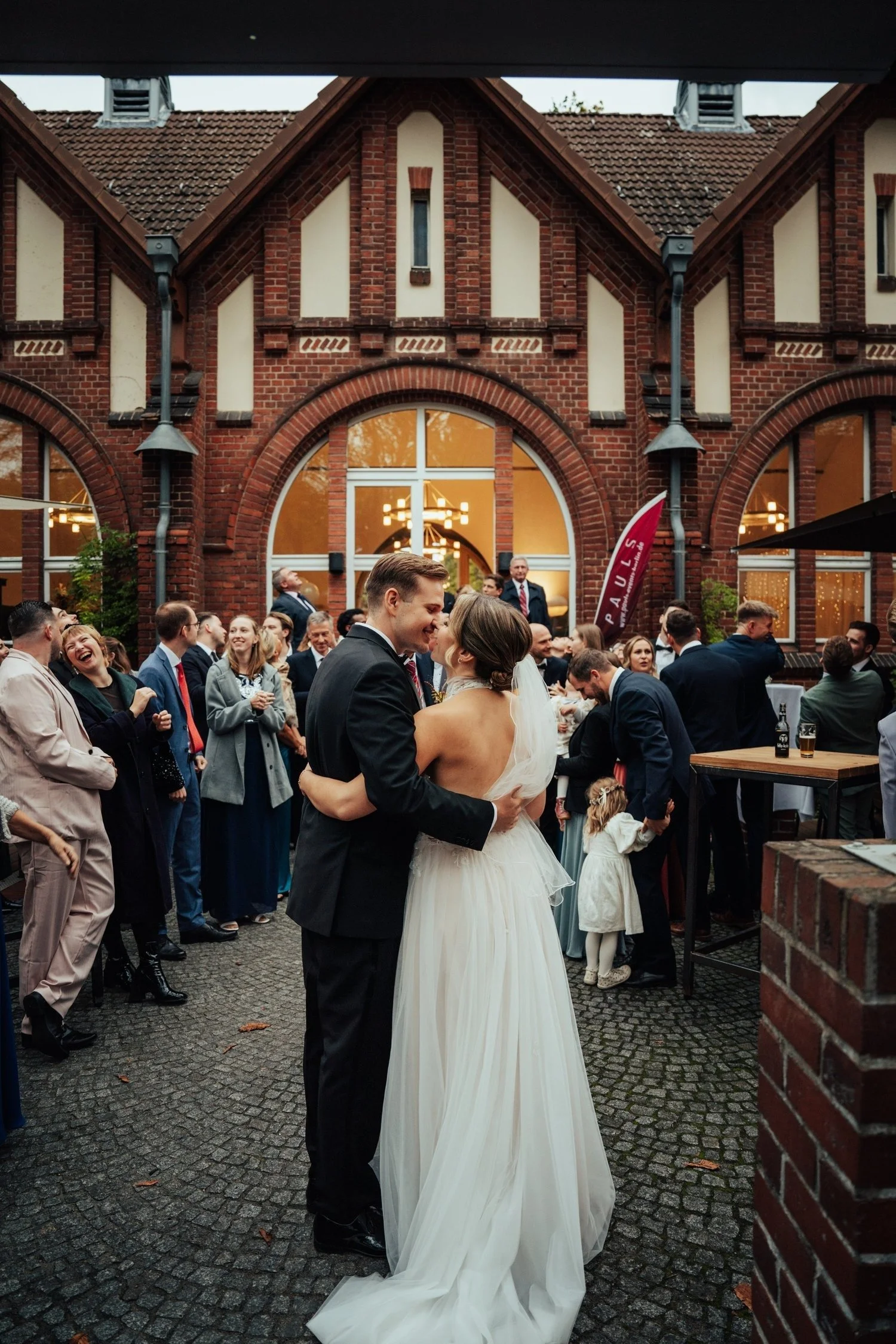
Ready to start planning?
If you're working through the paperwork now, the next part is the day itself. That's the part I photograph.
I photograph a limited number of weddings each year, so I can prepare properly for each one. In the words of Lena & Björn, from the reviews on my homepage: "We felt in good hands on our wedding day. The atmosphere was relaxed and we were guided by you through all the pictures."
Get in touch here: tell me your registry office, your rough date and how many guests you expect, and I'll come back to you with how the timing usually works. You can see my 2027 collections on the pricing page.
